What Makes a Crystal a Crystal?
A simple guide to structure, growth, and what separates crystals from ordinary rocks
What makes a crystal a crystal is a question that sounds simple—but the answer is surprisingly fascinating. At first glance, crystals and rocks can look very similar. Both come from the Earth, both are made of minerals, and both can be beautiful. Yet scientifically and structurally, crystals are very different from ordinary rocks.
This guide breaks the topic down in a clear, approachable way. You’ll learn how crystals form, what gives them their unique shapes, and why not every shiny stone qualifies as a crystal. Whether you’re curious from a scientific perspective or interested in crystals for spiritual or decorative reasons, understanding the basics helps you appreciate them on a deeper level.
What Is a Crystal, Scientifically Speaking?
At its core, a crystal is a solid material whose atoms are arranged in a highly ordered, repeating pattern. This internal structure is what truly defines a crystal—not its size, color, or price.
Unlike random materials, crystals grow according to precise geometric rules. Their atoms stack in predictable ways, forming repeating units called crystal lattices. These invisible patterns determine everything from a crystal’s shape to how it breaks and reflects light.
In simple terms:
- Crystals have order
- Rocks are usually mixtures
This difference is the foundation of what makes a crystal a crystal.
The Importance of Internal Structure
You can’t always see a crystal’s structure with the naked eye, but it’s always there. The internal arrangement of atoms repeats over and over in three dimensions, creating strength, symmetry, and consistency.
This structure explains why:
- Crystals often form flat faces and sharp angles
- They break in predictable ways (cleavage or fracture)
- They interact with light in unique patterns
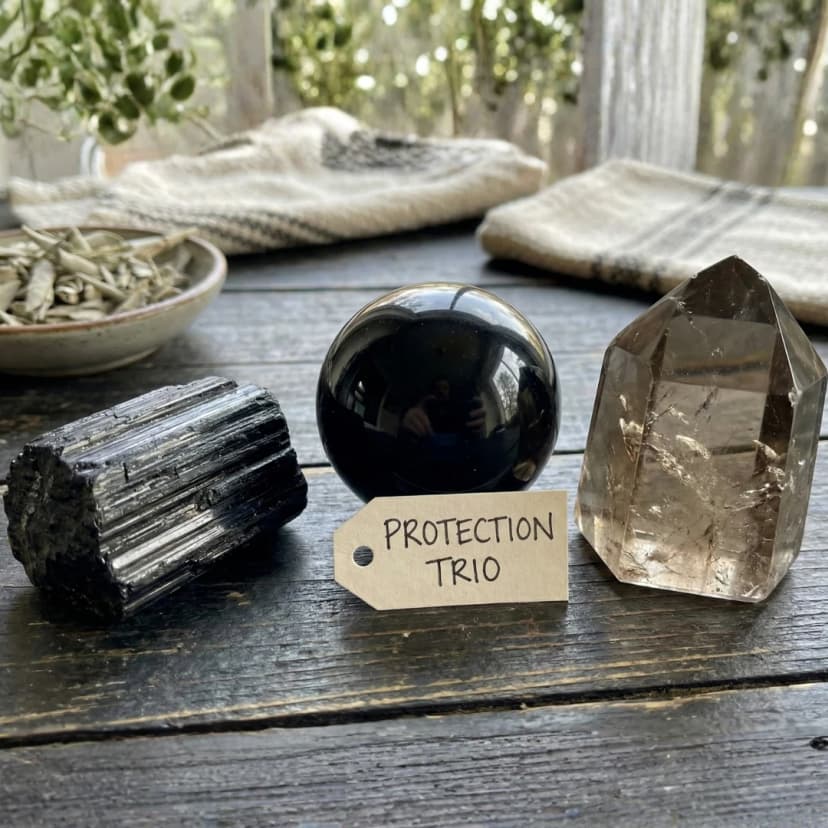
For example, quartz always forms based on the same atomic blueprint, whether it appears as a tiny grain or a towering crystal point.
How Crystals Grow in Nature
Crystals don’t grow the way plants or animals do. Instead, they form when conditions allow atoms or molecules to arrange themselves slowly and evenly.
Common Ways Crystals Form
- Cooling magma or lava: Minerals crystallize as molten rock cools
- Evaporation: Dissolved minerals crystallize as water evaporates
- Pressure and heat: Deep within the Earth, atoms rearrange into crystal structures
- Chemical reactions: Elements combine and lock into repeating patterns
The key factor is time. The slower the growth, the more defined the crystal structure becomes.
Why Crystals Have Distinct Shapes
One of the easiest ways to identify a crystal is by its shape. Crystals naturally form geometric patterns because their internal structure dictates how they grow outward.
Some common crystal shapes include:
- Cubes
- Hexagonal prisms
- Octahedrons
- Rhombohedrons
Each shape reflects the way atoms bond and repeat internally. This is why salt forms cubes and quartz forms six-sided points—nature follows structure, not chance.
What Is a Rock, Then?
A rock is usually a combination of multiple minerals rather than a single, ordered structure. Rocks can contain crystals, but they are not necessarily crystals themselves.
For example:
- Granite contains quartz, feldspar, and mica
- Basalt contains microscopic mineral grains
- Sandstone is made of compacted particles
Rocks are more like mixed recipes, while crystals are single, precise formulas.
Crystals vs Ordinary Rocks: Key Differences
| Feature | Crystals | Ordinary Rocks |
|---|---|---|
| Internal structure | Repeating, ordered | Mixed or random |
| Shape | Geometric, predictable | Irregular |
| Composition | Usually one mineral | Multiple minerals |
| Growth | Structured and gradual | Formed by compression or mixture |
This comparison highlights exactly what makes a crystal a crystal.
Why Not All Crystals Look “Perfect”
Many people expect crystals to look like polished points, but most natural crystals grow in crowded or imperfect environments.
Factors that affect appearance include:
- Limited space
- Impurities
- Rapid formation
- Pressure changes
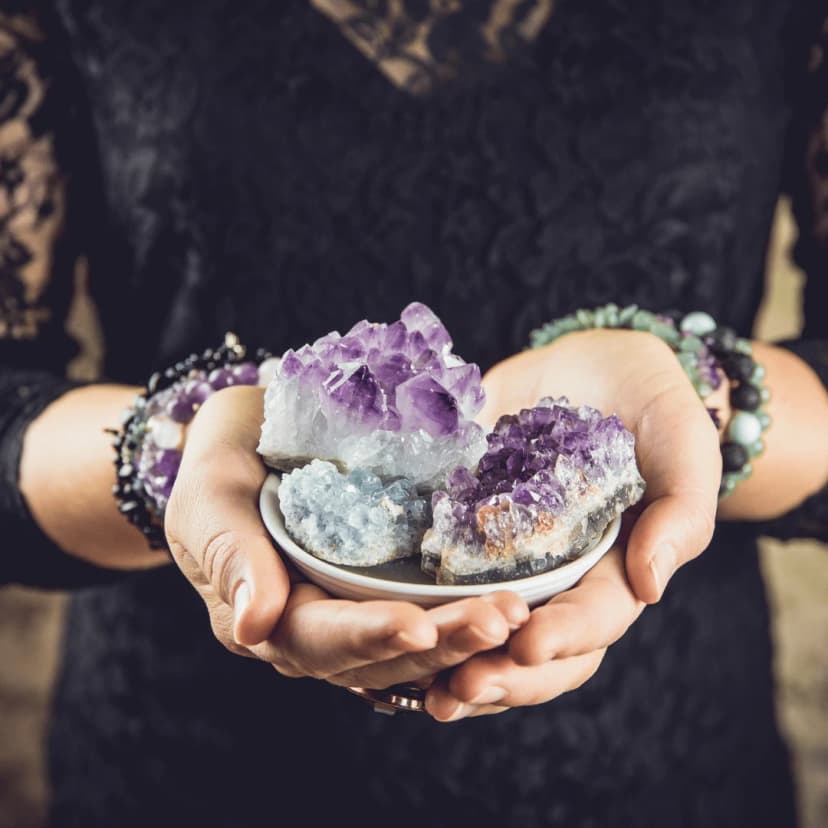
Even rough or broken specimens still qualify as crystals as long as their internal structure remains ordered.
Man-Made Crystals vs Natural Crystals
Crystals don’t have to come from the Earth to be real. Man-made crystals are grown in laboratories using the same physical rules found in nature.
Examples include:
- Quartz crystals in watches
- Silicon crystals in electronics
- Synthetic gemstones
The difference lies in origin, not structure. If the atomic pattern repeats, it’s a crystal.
Why Crystal Structure Matters Beyond Geology
Crystal structure isn’t just interesting—it’s useful. Many modern technologies depend on the predictable behavior of crystals.
Quartz, for example, has piezoelectric properties, meaning it can convert pressure into electrical energy. This makes it essential in:
- Clocks and watches
- Computers
- Radios
- Medical equipment
This practical reliability comes directly from internal order.
Crystals in Cultural and Spiritual Contexts
Beyond science, crystals have held symbolic meaning across cultures for thousands of years. Their stability, clarity, and durability made them symbols of:
- Balance
- Permanence
- Focus
- Transformation
While science explains how crystals form, culture explores why humans connect with them emotionally and spiritually.
Do Crystals Need to Be Clear or Shiny?
No. Transparency and shine are surface features, not defining traits. Many crystals are:
- Opaque
- Dull
- Embedded in rock
A crystal’s identity comes from its internal order, not its polish.
How to Tell If a Stone Is a Crystal
You don’t need advanced tools, but a few clues help:
- Look for flat faces and angles
- Check for repeating shapes
- Observe consistent patterns
However, some crystals are microscopic, meaning professional analysis is sometimes needed.
Why Understanding Crystals Changes How We See Nature
Once you understand what makes a crystal a crystal, everyday objects look different. Salt grains, snowflakes, gemstones, and even bones show natural order at work.
Crystals remind us that nature often follows rules—quietly, beautifully, and with precision.
Frequently Asked Questions (FAQs)
1. Is every mineral a crystal?
Most minerals form crystals, but not all mineral samples show visible crystal shapes.
2. Are crystals rare?
No. Crystals are very common—many are microscopic or hidden inside rocks.
3. Is glass a crystal?
No. Glass lacks a repeating internal structure, even though it looks solid.
4. Can crystals grow at home?
Yes. Simple crystals can grow from solutions like salt or sugar.
5. Are gemstones always crystals?
Most gemstones are crystalline, but some materials like opal are not fully crystalline.
6. Why do crystals break cleanly?
Their atomic structure creates natural planes of weakness.
So, What Makes a Crystal a Crystal?
What makes a crystal a crystal is not its beauty, rarity, or value—but its order. A crystal is defined by its repeating internal structure, shaped by time, conditions, and the laws of nature.
Understanding this difference deepens appreciation for both crystals and the planet itself. Whether admired for science, symbolism, or simple curiosity, crystals stand as natural examples of structure, patience, and balance.
For more crystal education, guides, and thoughtfully curated collections, visit www.crystalcove.com.au, where curiosity meets clarity.